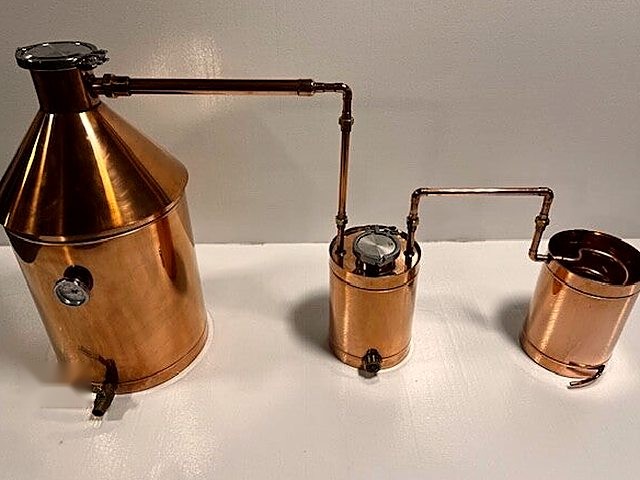
10 Gallon Copper Starter Still with Thumper and Worm
New to the craft? This 10 gallon copper still is our go-to starter setup, and it ships complete with a thumper keg and a worm condenser. You will not need to hunt down extra parts to get going, it is all here, ready to fire up for your first batch.
We build each still by hand from heavy, lead-free copper and seal the seams the traditional way, just as folks have done in these mountains for as long as anyone can remember. The thick copper holds a full load of mash with no trouble and naturally cleans up the vapor for a smooth result, whether you are running whiskey, brandy, rum, or moonshine.
- 10 gallon starter still with thumper and worm included
- Shaped from 100% lead-free copper
- Seams joined by hand with food-grade solder
- An honest, ready-to-run rig for beginners
- Free U.S. shipping
✓ Solid lead-free copper · ✓ Ships free anywhere in the U.S. · ✓ Backed by our 2-year guarantee
Good to know
Every distiller's first run is part science lab and part kitchen. This 10 gallon copper starter still gives you the whole setup at once: a hand-built boiler, a thumper keg and a worm condenser. You won't have to chase missing parts or match up odd hardware. We form each one from heavy, 100% lead-free copper and seal the seams by hand with food-grade solder, the way folks have done it in these mountains for as long as anyone can remember.
Is a 10 gallon still a good size for a beginner?
For many newcomers, yes. It's big enough to make a run worth your time and small enough to learn on. You'll get a feel for controlling heat, watching the thumper work and seeing how vapor behaves as the temperature climbs.
- Sturdy build: thick copper holds a full load of mash with no trouble.
- Smoother results: copper naturally cleans up the vapor, which is a big reason pot stills are made from it.
- Start legal: owning a still is legal in the US, but making whiskey, brandy, rum or moonshine needs federal TTB permits. Distilled water, essential oils and fuel alcohol are other common uses.
- Keep notes: write down temperatures and timings on every run. That notebook will become your best teacher.
Not sure what else you'll need on day one? Ask us and we'll help you plan your first run.